Pavers vs. Stamped Concrete Driveways: Which Lasts Longer in Florida?
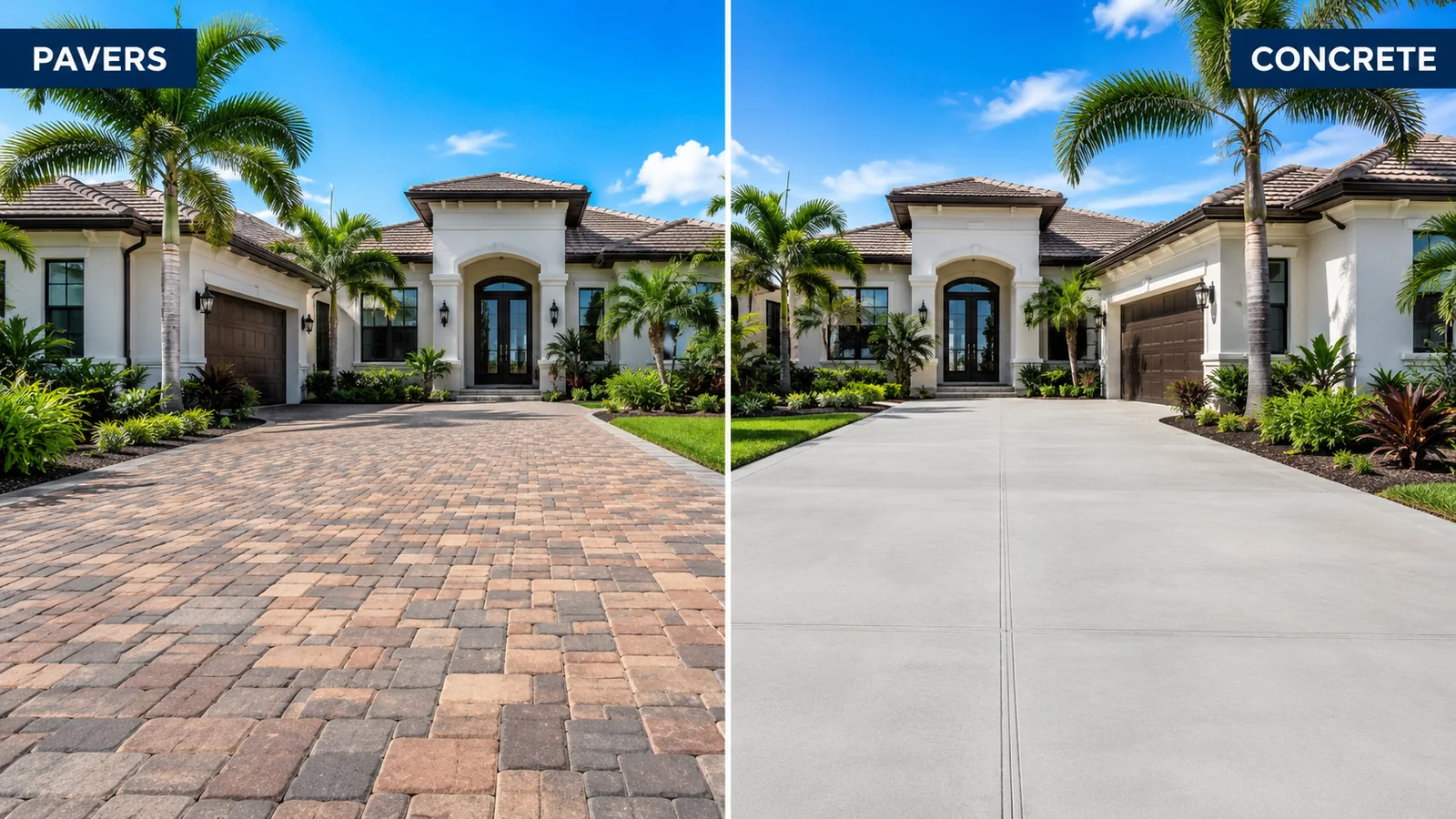
If you’re upgrading your driveway in Jacksonville, the decision usually comes down to two options: interlocking pavers or stamped concrete. Both look great on day one. But five years into Florida’s heat, rain, and soil conditions, one of these options holds up dramatically better than the other.
Here’s an honest, side-by-side comparison from a contractor who installs both.
The Head-to-Head Comparison
| Factor | Interlocking Pavers | Stamped Concrete |
|---|---|---|
| Lifespan | 25–50+ years | 15–25 years |
| Cracking risk | ? Virtually none — joints flex | ? High — rigid slab cracks over time |
| Repairability | ? Lift and replace individual pavers | ? Patch repairs always visible |
| Cost (installed) | $12–$25/sq ft | $10–$18/sq ft |
| Maintenance | Re-sand joints, occasional sealing | Reseal every 2–3 years mandatory |
| Color retention | Color runs through entire paver | Surface color only — fades and wears |
| Florida soil movement | ? Flexible system absorbs settling | ? Rigid slab cracks when soil shifts |
| Resale value impact | High — buyers see premium material | Moderate — looks good when new, concerns about cracking |
Why Stamped Concrete Fails Faster in Florida
Stamped concrete is a single, continuous slab with a decorative pattern pressed into the surface before it cures. It looks beautiful when freshly poured. The problem is that a continuous slab has no flexibility. When Jacksonville’s sandy soil settles, shifts, or erodes beneath the slab — which it inevitably does — the concrete has nowhere to go but crack.
And stamped concrete doesn’t crack gracefully. The cracks cut through the decorative pattern, creating an obvious and unsightly line that can’t be hidden. Patching stamped concrete never matches the original color or texture perfectly, so every repair is visible for the life of the driveway.
Florida’s heat cycle compounds the problem. Concrete expands in 95°F summer heat and contracts on cooler winter nights. Over thousands of cycles, this thermal stress creates hairline cracks that grow wider each year. By year 8–12 in Jacksonville, most stamped concrete driveways show visible cracking.
Why Pavers Handle Florida Better
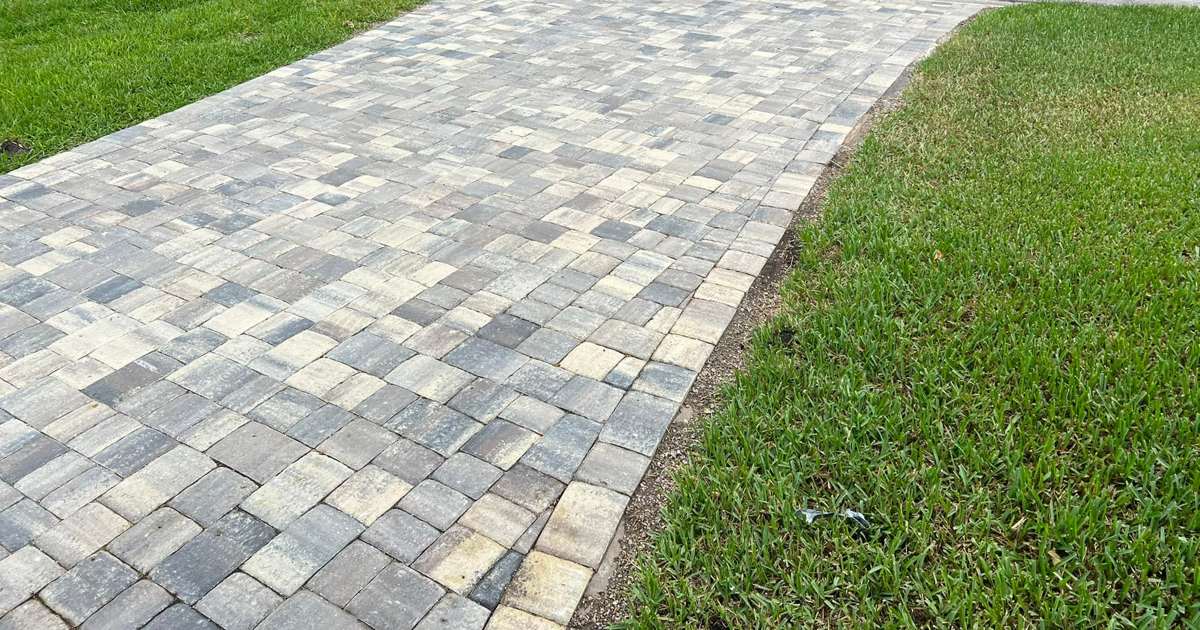
Interlocking pavers are individual units set on a flexible base of compacted aggregate and sand. Each paver can move independently — absorbing soil settling, thermal expansion, and ground movement without cracking. The joints between pavers act as stress relief points, distributing force across the entire surface instead of concentrating it at a single crack point.
When a paver does get damaged — from heavy impact, oil staining, or tree root pressure — you lift out the affected pavers, fix the base, and set new ones in place. The repair is invisible because replacement pavers match the originals exactly. Try that with stamped concrete.
Color is another advantage. Quality pavers are colored throughout the entire unit, not just on the surface. When the top wears from tire traffic over the years, the color beneath is identical. Stamped concrete color is surface-applied — once it wears through, you see gray concrete underneath.
The Cost Difference Is Smaller Than You Think
Stamped concrete costs $10–$18 per square foot installed. Pavers cost $12–$25 per square foot. On a typical 600-square-foot Jacksonville driveway, the price difference is roughly $1,200–$4,200 upfront.
But factor in long-term costs and the math shifts dramatically. Stamped concrete needs resealing every 2–3 years ($1–$3 per square foot each time) and will likely need crack repair or full replacement by year 15–20. Pavers need occasional joint re-sanding and optional sealing, but the surface itself lasts 25–50 years with no structural replacement needed.
Over a 25-year ownership period, pavers typically cost less than stamped concrete when you account for maintenance, repairs, and replacement timing.
When Stamped Concrete Still Makes Sense
We believe in being honest: stamped concrete isn’t always the wrong choice. It makes sense when you’re on a tight budget and need the lowest possible upfront cost, the area is small and on stable, well-compacted soil, the driveway is decorative rather than heavily trafficked, and you plan to sell within 5–7 years (it’ll still look good in that window).
For driveways that need to perform for 15+ years in Florida’s conditions, handle daily vehicle traffic, and maintain their appearance long-term, pavers are the stronger investment.
Get a Free Driveway Comparison Quote
Want to see the exact price difference for your specific driveway? At Coastal Driveway Pavers, we provide free estimates with a side-by-side cost breakdown so you can make an informed decision. Call (904) 867-4076 or book your free estimate online.
Frequently Asked Questions
Does stamped concrete always crack in Florida?
Not immediately, but virtually all stamped concrete in Florida develops visible cracking within 8–15 years due to soil movement and thermal cycling. The question isn’t whether it will crack — it’s when.
Are pavers more expensive than stamped concrete?
Slightly more upfront — typically $2–$7 per square foot more installed. But pavers cost less over 25 years when you factor in stamped concrete’s mandatory resealing, crack repairs, and earlier replacement timeline.
Can you stamp concrete to look like pavers?
Yes — stamped concrete mimics paver patterns. But it doesn’t have the structural advantages of actual pavers (flexibility, individual repairability, through-body color). The look is similar on day one, but the performance diverges significantly over time.
Which adds more resale value — pavers or stamped concrete?
Pavers consistently add more perceived value because buyers recognize them as a premium, long-lasting material. Stamped concrete can raise concerns about cracking and maintenance among informed buyers.