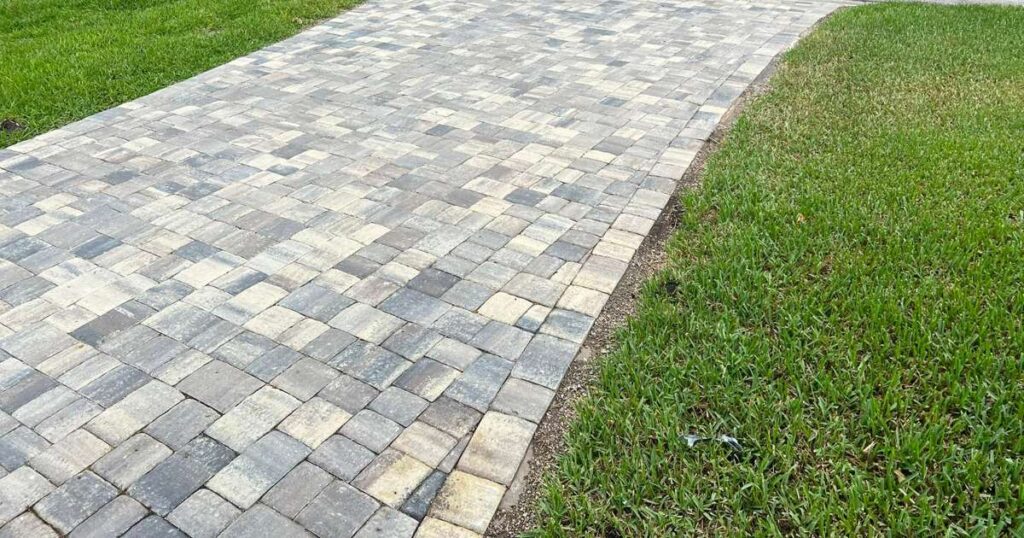
You have a quote for crushed shell next to a much bigger quote for pavers, and you want to know whether the cheap option is actually cheap.
Straight answer: a shell driveway in Northeast Florida costs $2 to $5 per square foot installed, so a typical 16 by 40 foot two-car drive (640 square feet) runs $1,280 to $3,200, plus $150 to $400 a year for replenishment shell and regrading. Pavers on the same footprint run $12 to $20 per square foot installed and need close to nothing for ten years.
We install pavers for a living, so you know which one we sell. We have also told plenty of people to keep their shell.
What shell driveways cost here
Two products get called shell. Shell rock, a tan-gray limerock and shell blend from Florida pits, compacts hard and belongs underneath. Washed coquina is the bright white topcoat everyone pictures, and it costs more.
- Shell rock $45 to $70, washed coquina $60 to $95, per cubic yard delivered
- One yard covers about 80 square feet at 4 inches deep
- Edging runs $6 to $14 per linear foot
A real install means stripping 4 to 6 inches of sod, woven geotextile so the shell does not vanish into our sand, 3 to 4 inches of compacted shell rock, then 1 to 2 inches of washed shell. Skip the fabric and you are usually buying it again within about three years.
The upkeep nobody quotes
Shell is loose, so it moves. Tires push it into two channels, downpours carry the fines off, and the bright white tends to dull toward gray within a year or two. Plan on raking every 4 to 8 weeks, a 2 to 4 yard top-up about once a year at $150 to $400, and a full regrade every 7 to 10 years.
None of that is hard. It is just permanent: at $150 to $400 a year, a $2,500 shell drive quietly absorbs another $3,000 to $8,000 over 20 years.
Shell in 52 inches of rain
Jacksonville gets about 52 inches of rain a year, much of it 1 to 2 inches in one August afternoon. Shell handles that better than people expect: it drains beautifully over our sandy subsoil, and many jurisdictions count it as pervious against lot coverage limits. Salt air does nothing to it, and freeze-thaw is not a factor here. Where it loses:
- Slope. Under about 3 percent it generally stays put. Above 5 or 6 percent you will likely be shoveling shell out of the gutter after storms.
- Tracking. Fragments ride into the garage, the pool cage, and onto wood floors.
- Soil pH. Shell dust raises bed pH, which azaleas and blueberries dislike.
Covenants and county permits
Plenty of Northeast Florida HOAs, especially newer St. Johns County communities, require a hard, dust-free surface and will not approve loose shell. Unincorporated Duval, Clay, and Nassau parcels are usually wide open. Read the ARB standards yourself.
Most jurisdictions also require a driveway connection permit and a hard apron where the drive meets the road, because loose material cannot migrate into the right of way. Call before the load arrives.
Shell versus the alternatives
| Surface | Cost/sq ft installed | Lifespan | Annual upkeep | HOA |
|---|---|---|---|---|
| Crushed shell or coquina | $2 to $5 | 7 to 10 yrs | $150 to $400 plus raking | Often restricted |
| Imported gravel | $3 to $7 | 7 to 10 yrs | $200 to $450 | Often restricted |
| Poured concrete | $8 to $14 | 25 to 40 yrs | Minimal | Yes |
| Interlocking pavers | $12 to $20 | 30 to 50 yrs | Minimal | Yes |
Line items are in what a paver driveway actually costs in Jacksonville, and our 20-year cost comparison of pavers vs asphalt in Florida shows how a low upfront number ages.
When to keep the shell
We will not pretend pavers always win. Keep the shell if:
- The drive runs past about 150 feet. At 12 feet wide, that is 1,800 square feet, and paving it becomes a $21,600 to $36,000 project.
- You are selling within 5 years and the neighborhood is not paved.
- The grade is under 3 percent and there is no HOA.
- It is a barn approach, a boat pad, or land you may re-plat.
- You genuinely like the look. A well-kept coquina drive under live oaks is a Northeast Florida thing.
When converting to pavers pays
Conversion earns its money once upkeep stops being cosmetic: you wash into the street after every storm, shell is tracking onto hardwood and into the pool cage, covenants are forcing it, or you have spent $2,000 on top-ups and you are still raking.
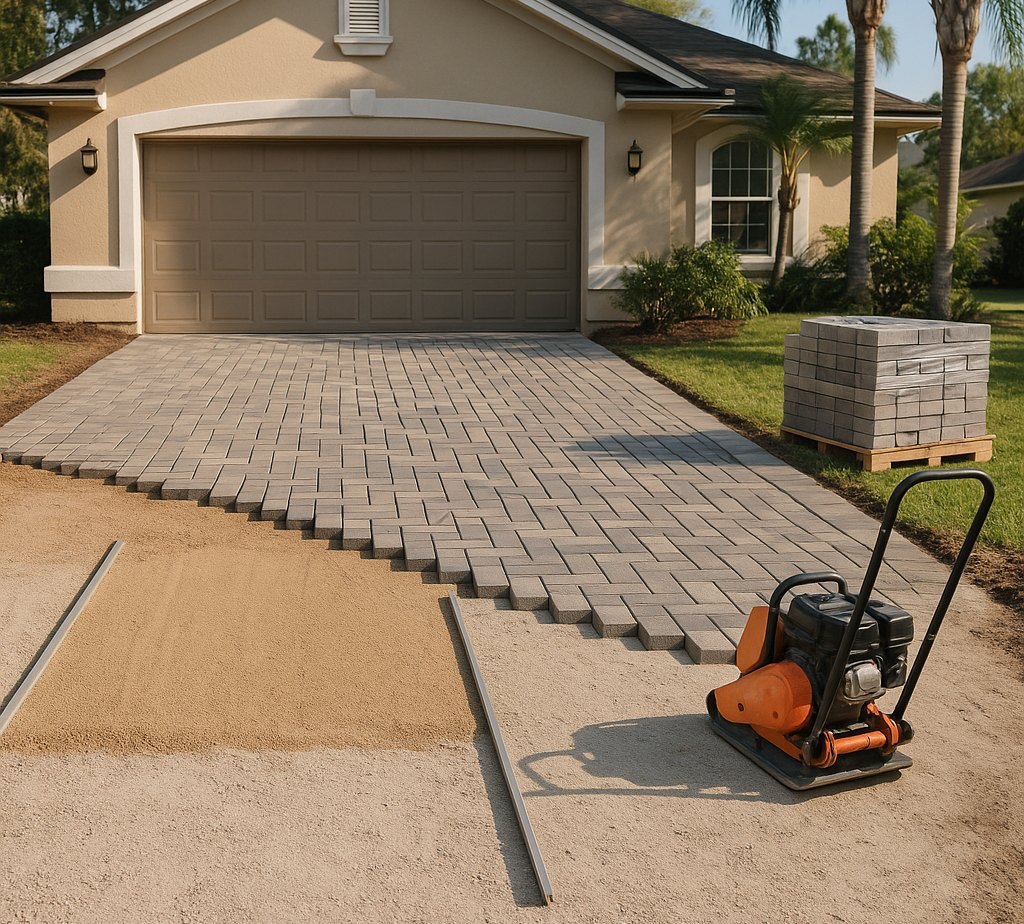
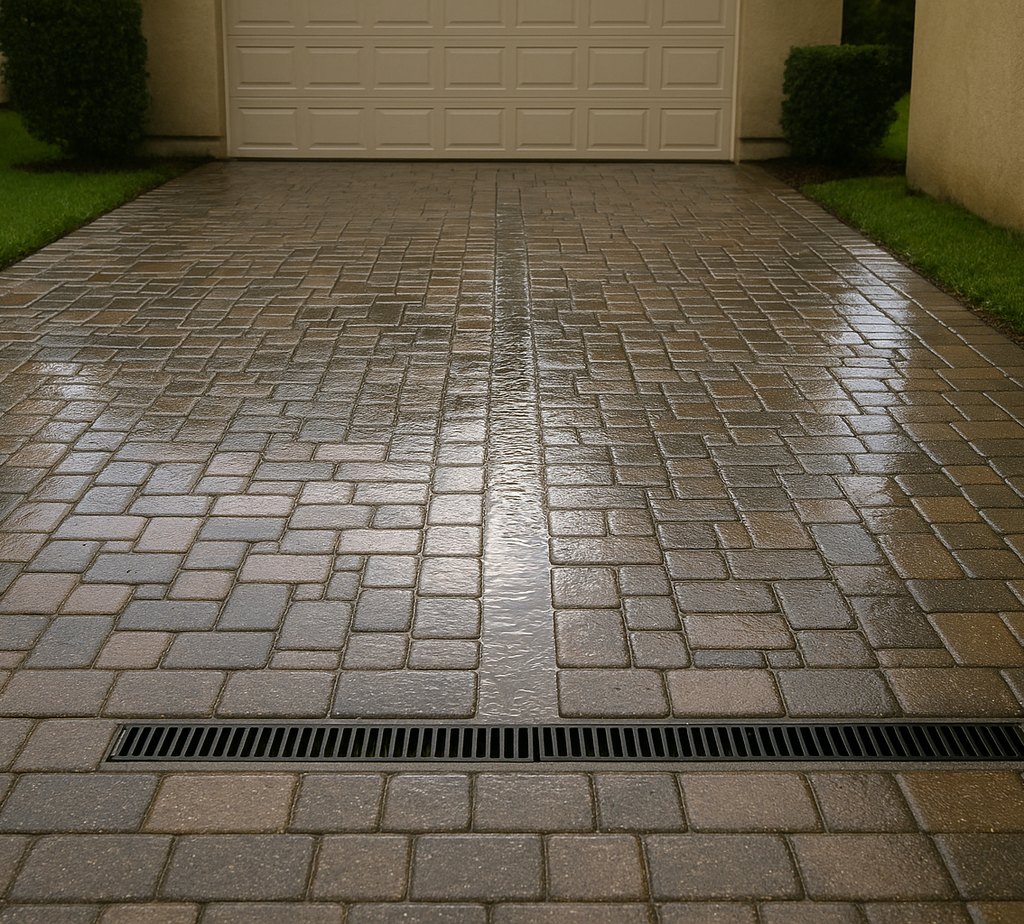
It is also an easy conversion: the compacted shell rock underneath is often a serviceable base once we recompact and regrade, which trims demolition off a paver driveway installation. Tabby-toned shell blends keep the pale, sun-washed look (see our driveway paver materials and design options), and permeable paver driveways keep the drainage.
Frequently asked questions
How much does a shell driveway cost?
Can you use shell for a driveway?
Is shell cheaper than gravel?
What are the pros and cons of a seashell driveway?
What type of driveway will last the longest?
Is it illegal to take shells home from the beach?
What is poor man’s concrete?
Get an honest read
Stuck between topping it up again and just paving it? We will come look and tell you what we would do if it were our house, keeping the shell included. Send us the drive’s dimensions and whatever surface language your covenants use, and we can tell you quickly whether a conversion is even worth pricing on your parcel.