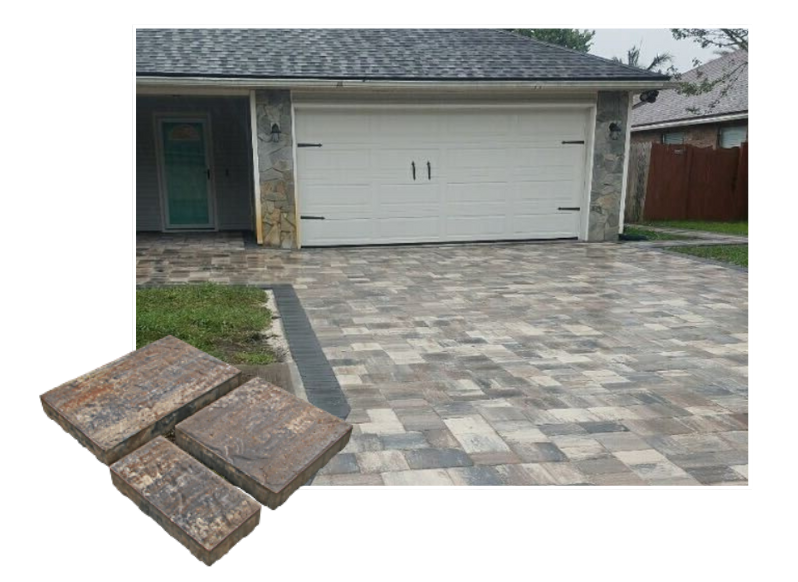
Travertine Driveways in Florida: Stunning Look, But Is It Worth the Price?
There’s no question that travertine is one of the most beautiful driveway materials available. Its natural veining, warm earth tones, and unique surface texture create an upscale look that concrete and brick pavers simply can’t replicate. But travertine comes with a premium price tag — and in Florida’s demanding climate, it requires specific care to maintain its appearance.
So is a travertine driveway worth the investment? Here’s the straight answer from a team that installs them regularly across Jacksonville.
What Makes Travertine Different
Travertine is a natural limestone formed in and around hot springs. Every piece is unique — with natural pitting, veining, and color variation that gives it character you can’t manufacture. Unlike concrete pavers, which are mass-produced in uniform molds, travertine slabs are quarried from the earth and cut to size. This makes every travertine driveway genuinely one-of-a-kind.
The material is naturally dense, slip-resistant (even when wet), and stays cooler underfoot than concrete or brick in direct sun — a significant advantage in Florida where driveway surface temperatures can exceed 150°F in summer.
The Real Pros and Cons
Why Homeowners Love Travertine
Unmatched aesthetics. Nothing else looks like travertine. The warm ivory, tan, and walnut tones complement Florida’s architectural styles perfectly — from Mediterranean to coastal contemporary. When visitors pull into a travertine driveway, they notice.
Cooler surface temperature. Travertine reflects more heat than it absorbs. In Jacksonville’s summer, a travertine driveway surface is noticeably cooler to the touch than concrete pavers. If you walk barefoot on your driveway (it happens), you’ll appreciate this.
Natural slip resistance. The slightly textured, tumbled surface of travertine provides excellent traction, especially when wet. This makes it popular for driveways that double as basketball courts, play areas, or paths to pool decks.
Durability. Quality travertine pavers are rated for vehicular traffic and last 30–50+ years with proper installation and maintenance. The stone itself has survived millennia — the Colosseum in Rome is made of it.
What You Need to Know Before Committing
It costs more. Travertine driveways run $15–$28 per square foot installed — 40–60% more than standard concrete pavers. On a 600 sq ft driveway, that’s a $3,000–$6,000 premium.
It’s porous. Travertine has natural pitting and pores that absorb liquids. Oil, wine, and colored liquids can stain if not cleaned promptly. Sealing the surface mitigates this, but sealed travertine needs resealing every 2–3 years to maintain protection.
Efflorescence is common. White mineral deposits can appear on the surface during the first year as moisture moves through the stone. This is a natural process that fades over time and can be cleaned with a mild acid wash — but it surprises homeowners who aren’t warned about it.
Color variation is part of the deal. Natural stone means natural variation. The travertine you see in the showroom will look slightly different from the travertine delivered to your driveway. If you need exact color uniformity across every paver, concrete pavers are a better fit.
Travertine vs. Other Paver Materials for Florida Driveways
| Travertine | Concrete Pavers | Brick Pavers | |
|---|---|---|---|
| Cost (installed) | $15–$28/sq ft | $10–$18/sq ft | $12–$22/sq ft |
| Visual impact | ????? | ????? | ????? |
| Surface temp (summer) | Coolest | Warm–hot | Warm |
| Stain resistance | ?? Porous — needs sealing | ? Good without sealing | ?? Moderate |
| Maintenance | Seal every 2–3 years | Optional sealing | Occasional sealing |
| Uniqueness | Every piece unique | Uniform by design | Uniform with slight variation |
Who Should Choose Travertine?
Travertine is the right choice if you want the most visually impressive driveway material available, you’re comfortable with the higher upfront cost and the commitment to periodic sealing, your home’s architecture benefits from natural stone (Mediterranean, coastal, luxury contemporary), you value a cooler surface in Florida’s heat, and you appreciate natural variation and character over perfect uniformity.
Travertine may not be the right choice if you’re budget-focused and want the most driveway per dollar, you park vehicles that frequently leak oil (staining risk), you prefer a completely uniform, manufactured look, or you want the lowest-maintenance option available.
See Travertine Driveways in Person
Photos don’t do travertine justice. The color, texture, and surface feel are best experienced in person. At Coastal Driveway Pavers, we bring physical samples to your property during your free consultation so you can see exactly how travertine looks next to your home’s exterior. Call (904) 867-4076 to schedule your free estimate.