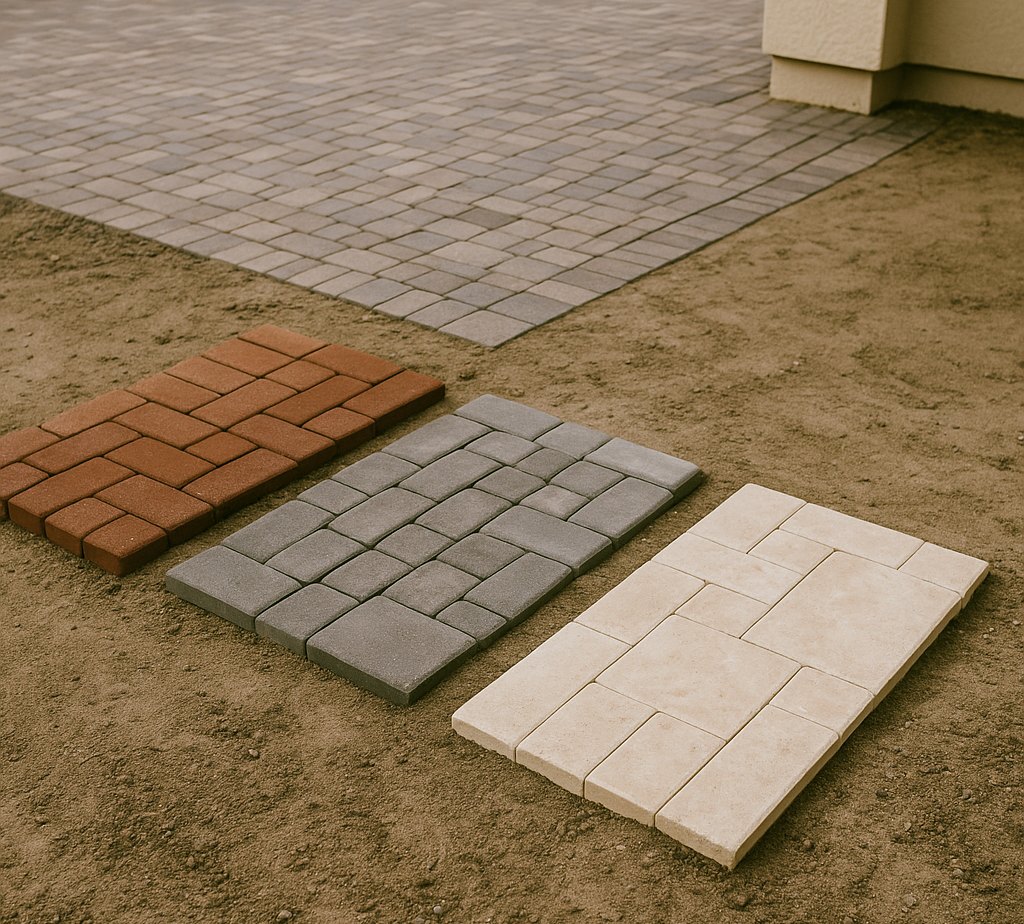
Brick vs. Concrete vs. Natural Stone Pavers: Which Material Is Right for Your Jacksonville Driveway?
You’ve decided on pavers for your driveway. Smart choice. Now comes the next decision: which paver material? Coastal Driveway Pavers offers brick, concrete, and natural stone — and each one brings different strengths to the table. Here’s a straightforward comparison to help you choose.
The Three Materials Side by Side
| Factor | Brick Pavers | Concrete Pavers | Natural Stone |
|---|---|---|---|
| Cost (installed) | $12–$22/sq ft | $10–$18/sq ft | $18–$30/sq ft |
| Lifespan | 30–50 years | 25–40 years | 40–60+ years |
| Color source | Kiln-fired — permanent, through-body | Mixed in — fades slowly over time | Natural — unique, permanent |
| Shape/size options | Limited — mostly standard rectangles | Widest variety — any shape/size | Varies by stone type |
| Maintenance | Low — occasional seal | Low — seal every 2–3 years | Moderate — seal regularly, clean pores |
| Strength (PSI) | 8,000–12,000+ | 8,000–9,500 | Varies (granite highest) |
| Look / style | Classic, timeless, warm | Modern, versatile, uniform | Luxurious, unique, organic |
| Best for | Traditional and colonial homes | Any style, best value | Upscale, custom, luxury homes |
Concrete Pavers: The Versatile All-Rounder
Concrete pavers are the most popular driveway material in Jacksonville — and for good reason. They offer the widest range of shapes, sizes, colors, and patterns of any paver type. Want a herringbone pattern in charcoal gray? A cobblestone look in warm tan? A clean, modern slab in white? Concrete pavers can do all of it.
They’re manufactured under extreme pressure and precision, which means consistent sizing, reliable strength ratings, and predictable behavior over decades. Tremron, Belgard, and other manufacturers produce concrete pavers specifically engineered for Florida’s climate and load requirements.
The trade-off: concrete paver color is mixed into the material during manufacturing. Over many years of UV exposure, the surface color can fade slightly — though quality pavers with UV stabilizers hold their color well. Sealing every 2–3 years helps maintain vibrancy.
Choose concrete pavers if: you want the most design flexibility, you’re value-conscious, and you want a material that performs reliably in every application.
Brick Pavers: The Classic That Never Goes Out of Style
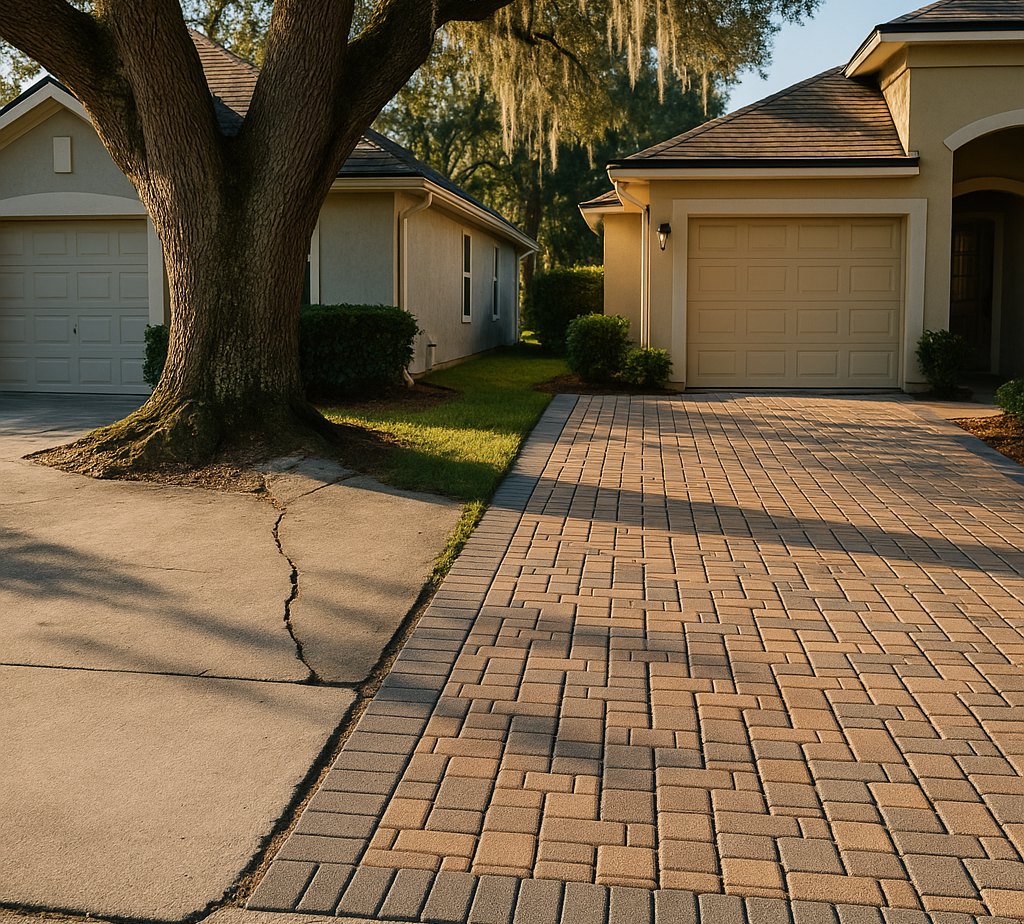
Brick pavers are made from kiln-fired clay — a process that makes their color permanent and through-body. Unlike concrete pavers where color can fade, a brick paver’s color is baked into the material at 2,000°F. The brick you install today will be the same color in 30 years. It won’t fade from UV, won’t wear through from tire traffic, and won’t change tone when wet.
Brick also has the highest compressive strength of any common paver material — 8,000 to 12,000+ PSI depending on the product. They’re virtually indestructible under normal driveway use.
The trade-off: brick pavers come in fewer shapes and sizes than concrete. You’re mostly working with standard rectangles in earth tones — reds, browns, tans, and charcoals. If you want a large-format slab, unusual shapes, or non-traditional colors, concrete or stone offer more options.
Choose brick pavers if: you want a classic, timeless look that ages beautifully, color permanence is important to you, and your home’s architecture suits warm earth tones.
Natural Stone Pavers: The Premium Statement
Natural stone — flagstone, bluestone, granite, slate, or travertine — is the most visually striking driveway material available. Every piece is unique. The color, veining, texture, and surface character are created by nature over millions of years. No two natural stone driveways look alike.
Stone is also the longest-lasting material. Properly installed granite or bluestone driveways can last 60+ years with minimal maintenance. The material itself is essentially permanent — it’s the base and joints that need attention over time, not the stone.
The trade-off: cost and maintenance. Natural stone is the most expensive paver option (starting at $18/sq ft and going well above $30 for premium granite), takes more labor to install because of irregular sizing, and some stone types (especially porous ones like travertine and sandstone) require regular sealing.
Choose natural stone if: you want a truly unique, luxury driveway that makes a statement, you have the budget for premium materials, and your home’s aesthetic benefits from organic, natural textures.
Not Sure Which Material Is Right? We’ll Help You Decide
The best way to choose is to see and touch the materials in person — not just in photos. During your free consultation with Coastal Driveway Pavers, we bring physical samples of brick, concrete, and natural stone options so you can compare them side by side against your home’s exterior. We’ll also show you the exact cost difference for your specific driveway size so you can make an informed decision.
Call (904) 867-4076 or book your free estimate online.
Frequently Asked Questions
What’s the most affordable paver material for a driveway?
Concrete pavers, starting at $10–$14 per square foot installed. They offer the best value while still delivering excellent durability, design variety, and long-term performance in Jacksonville’s climate.
Which paver material lasts the longest?
Natural stone — particularly granite and bluestone — lasts the longest at 40–60+ years. Brick is a close second at 30–50 years. Concrete pavers last 25–40 years. All three far outlast poured concrete or stamped concrete driveways.
Can I mix different paver materials in one driveway?
Absolutely. Mixing materials — such as concrete pavers in the main field with a brick or natural stone border — is one of the most popular design approaches. It combines the value of concrete with the visual impact of premium accent materials.
Which material handles Florida heat best?
Travertine (a natural stone) stays coolest underfoot in direct sun. Brick and lighter-colored concrete pavers are next. Darker-colored concrete and some dense natural stones absorb more heat and get warmer. If barefoot comfort matters, lighter colors and travertine are your best options.